
Most Common Ice Hockey Injuries & How To Prevent Them By Stretching
1. Concussions
Head impacts are a major risk in hockey, usually caused by a direct hit from an opponent’s shoulder or elbow, or from slamming into the boards or the ice. Even with modern helmets, the brain can still rattle inside the skull.
Warmup/Stretching For Prevention:
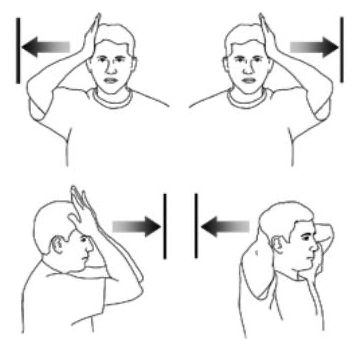
Isometric Neck Holds: Press your hand against your forehead and push forward with your neck, resisting the movement so your head stays still. Hold for 5 seconds. Repeat pushing from the back and both sides. Stronger neck muscles help absorb impact forces before they reach the brain.
https://medium.com/@chikittsawellnessthane/isometric-exercises-for-neck-support-8aef8849c229
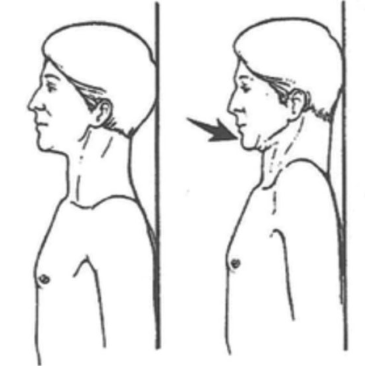
Chin Tucks: Sit tall, look straight ahead, and pull your chin straight back like you are making a double chin. Hold for 2 seconds and release. Repeat 10 times to activate deep neck stabilizers.
https://www.audleyvillages.co.uk/audley-stories/story/physio-exercise-of-the-month-chin-tuck
2. AC Joint Separation (Separated Shoulder)
This is the most frequent upper-body injury. It happens when a player takes a direct hit to the shoulder, either from a body check or a hard fall, which sprains or tears the ligaments connecting the collarbone to the shoulder blade.
Warmup/Stretching For Prevention:
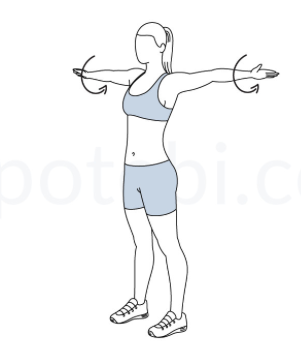
Arm Circles and Hugs: Swing your arms in large circles forward and backward, then transition into swinging them horizontally across your chest like you are giving yourself a big hug. Do 15 reps of each to lubricate the shoulder joint.
https://spotebi.com/exercise-guide/arm-circles/
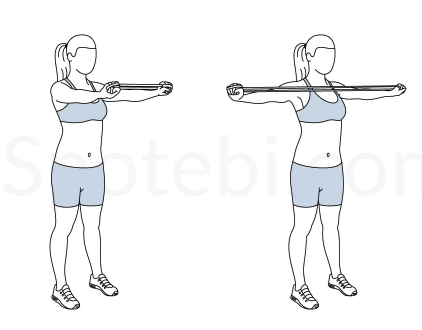
Band Pull-Aparts: Hold a light resistance band out in front of you at shoulder height. Pull your hands apart, squeezing your shoulder blades together. Do 12 to 15 controlled reps to wake up the upper back and stabilize the shoulders.
https://spotebi.com/exercise-guide/mid-back-band-pull/
3. Groin and Hip Flexor Strains
The powerful, explosive side-to-side pushing motion required for skating puts massive stress on the inner thigh and hip muscles. Without a proper warm-up, these muscles can easily overstretch or tear.
Warmup/Stretching For Prevention:
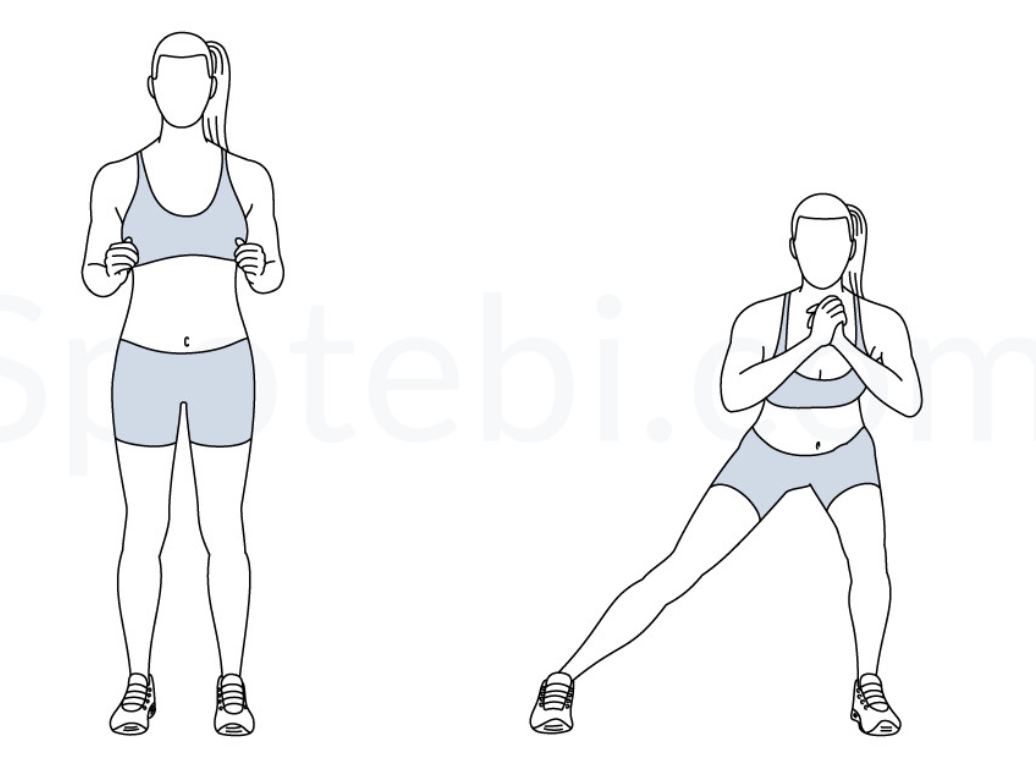
Lateral Lunges: Stand wide and shift your weight to one side, bending that knee while keeping the other leg straight. Push back up and repeat on the other side. Do 10 reps per side to stretch the inner groin and prep the knees for skating forces.
https://spotebi.com/exercise-guide/side-lunge/
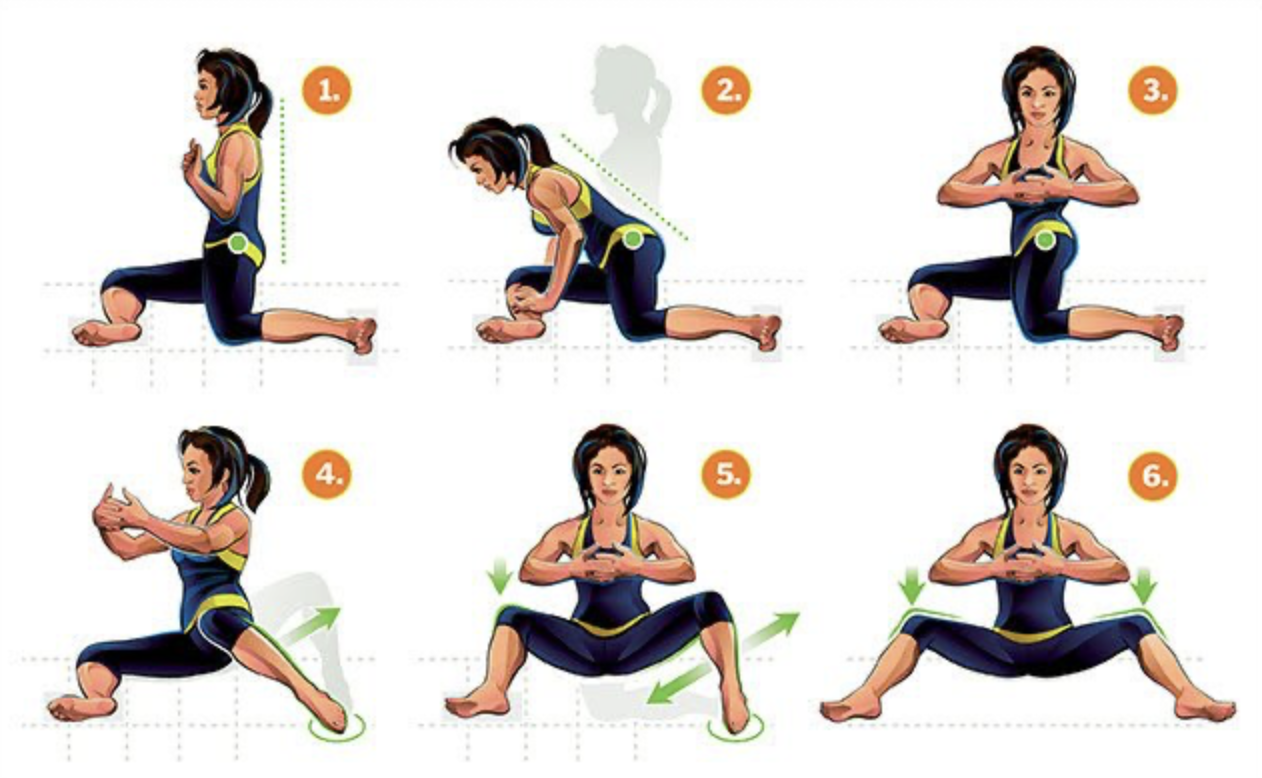
90/90 Hip Flips: Sit on the floor with your front leg bent at a 90-degree angle in front of you and your back leg bent at a 90-degree angle to the side. Without lifting your feet, rotate your knees up and over to the opposite side. Do 8 reps per side to open up tight hip joints.
https://x.com/MtbApp/status/1145575432617680897
4. MCL Sprains (Knee Injury)
The medial collateral ligament (MCL) sits on the inside of the knee. Because hockey players constantly push off the inside edges of their skates, the knee is naturally vulnerable to collapsing inward, especially if another player hits the outside of the leg.
Warmup/Stretching For Prevention:
C-Cuts (Inside Edge Emphasis): Skate forward using only the inside edge of one skate to cut a large "C" shape into the ice, keeping your knee stable and aligned over your toes. Switch legs. This builds control in the exact joint angle where MCL injuries happen.
Gliding Single-Leg Squats: While coasting down the ice, lift one foot and do a shallow single-leg squat on the skating leg, focusing on keeping your knee tracking straight over your skate blade without caving inward.
5. Facial Lacerations and Dental Injuries
Despite high-tech helmets, cuts to the face from stray sticks or high pucks are incredibly common, particularly in older leagues where players switch from full cages to partial visors or no facial protection.
Warmup/Stretching For Prevention:
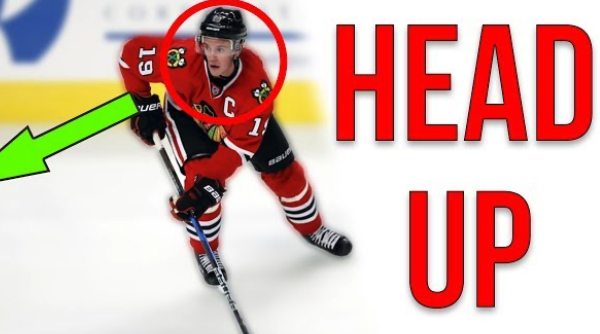
Peripheral Vision Tracking: While doing easy warmup laps, keep your head up and consciously practice looking at the rafters, the benches, and the puck on your stick using only your peripheral vision. Keeping your head up and maintaining high situational awareness is your best physical defense against high sticks and stray pucks.
https://www.youtube.com/watch?v=fkWHTozUJEU
6. High Ankle Sprains
Regular anklesprains happen, but high ankle sprains are unique in hockey. A player's skate boot acts like a rigid splint around the foot, so when a player twists awkwardly or crashes into the boards, that twisting force bypasses the lower ankle and tears the ligaments higher up the shin.
Warmup/Stretching For Prevention:
Ankle Edging Drills: Coast slowly down the ice and consciously tilt your ankles inward to glide on your inside edges, then outward onto your outside edges. This wakes up the proprioception (spatial awareness) in your lower leg inside the rigid skate boot.
7. Clavicle (Collarbone) Fractures
Like shoulder separations, breaking a collarbone usually happens when a player is checked hard into the rigid boards or lands awkwardly on the ice with their arm tucked in.
Warmup/Stretching For Prevention:
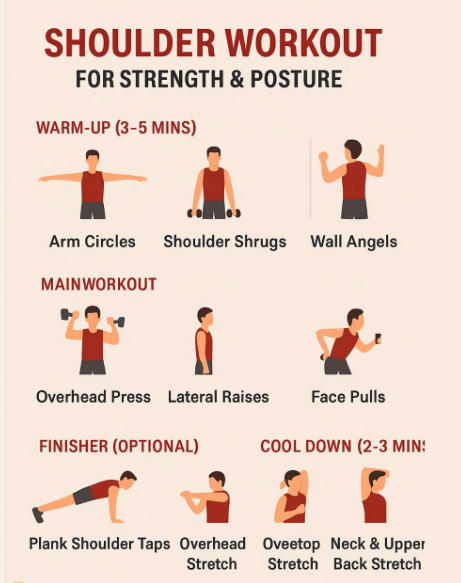
Shoulder & Neck Strength: Focus on strengthening your deltoids, trapezius, and rotator cuffs (e.g., overhead presses, lateral raises, and face pulls). Stronger muscles act as secondary stabilizers to absorb shock during a collision.
8. Wrist and Finger Fractures
Slashing sticks and blocking shots mean the hands and wrists take a beating. Fractures often occur when a hand gets jammed against the boards or struck directly by a flying puck or stick.
Warmup/Stretching For Prevention:
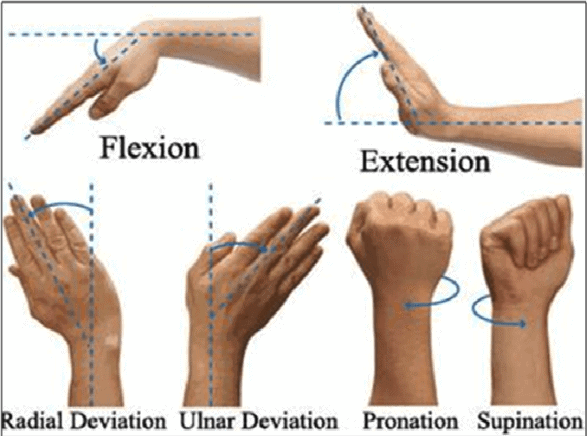
Wrist Extensions and Flexions: Extend your arm forward, palms up, and use your other hand to gently pull your fingers down toward the floor. Then, flip your palm down and pull your knuckles toward you. Hold each position for 10 seconds to increase flexibility before taking stick impacts.
https://www.precisionmovement.coach/wrist-extensors/
9. Thigh and Rib Contusions (Deep Bruises)
A vulcanized rubber puck traveling at high speeds or a hard elbow to the torso can cause severe, painful bone and muscle deep bruises, even through thick protective padding.
Warmup/Stretching For Prevention:
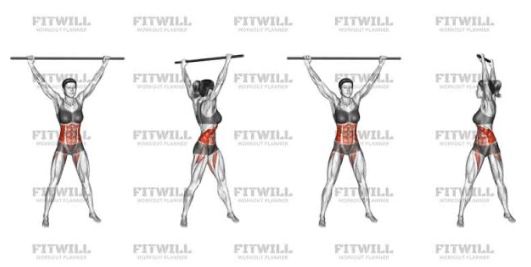
Torso Twists with Stick: Place your hockey stick across your shoulders behind your neck, holding it with both hands. As you glide slowly, gently twist your torso from side to side. This stretches the obliques, ribs, and lower back muscles, making them less rigid if you take a body check.
https://fitwill.app/exercise/5403/stick-standing-twist-stretch/
10. Meniscus Tears
The constant pivoting, sudden stops, and sharp turns at high speeds put a lot of twisting pressure on the knee. This can cause a tear in the meniscus, the shock-absorbing cartilage inside the joint.
Warmup/Stretching For Prevention:
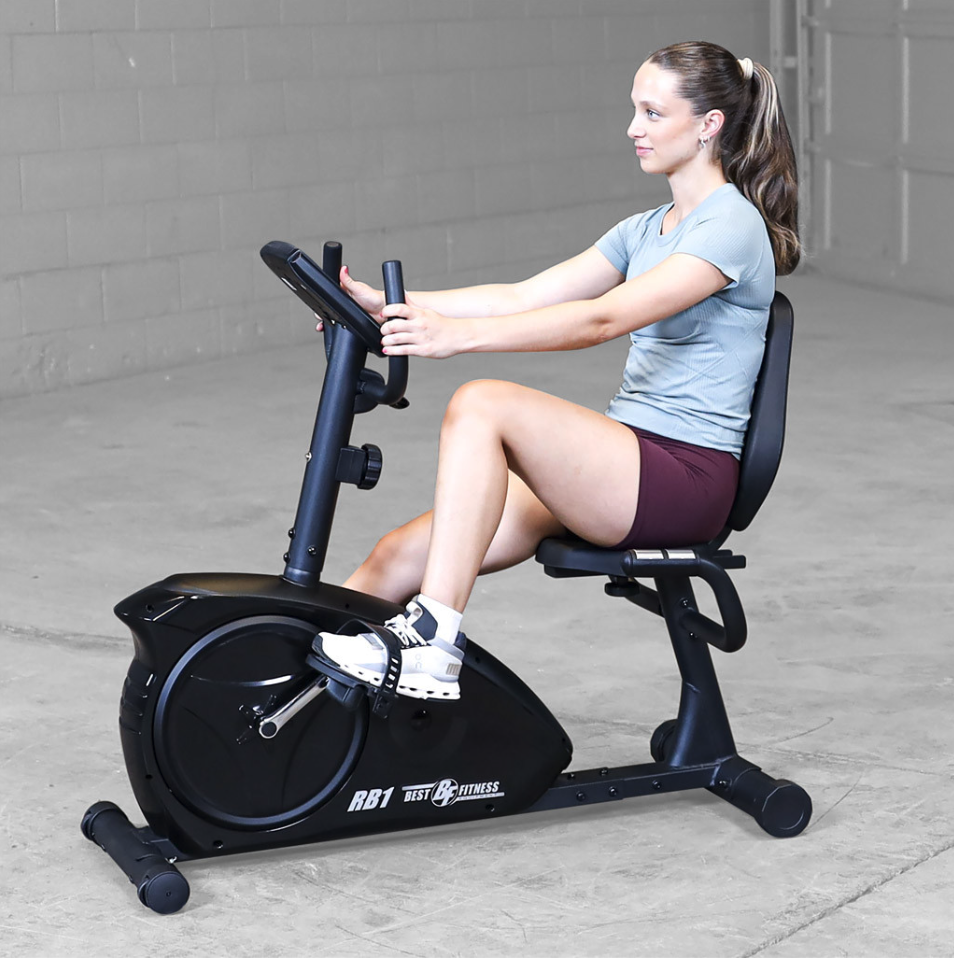
Stationary Bike (5-10 minutes): Gentle, low-resistance cycling gets synovial fluid pumping into the knee and increases blood flow to the legs without placing the meniscus under sudden loads.
Resources
https://orthoinfo.aaos.org/en/staying-healthy/hockey-injury-prevention
https://www.ibji.com/blog/sports-medicine/mastering-the-ice-techniques-to-prevent-hockey-injuries/
https://www.atipt.com/most-common-ice-hockey-injuries-and-prevention/
https://pmc.ncbi.nlm.nih.gov/articles/PMC12737072/
https://www.ucalgary.ca/shred-injuries/all-sports/ice-hockey
https://physioextra.ca/en/health-tips/preventing-common-hockey-injuries/
https://training.rinkhive.com/2025/10/21/hockey-warm-up-routines-dynamic-exercises/
https://hockeytraining.com/warm-up/
https://www.garyrobertsperformance.com/blog/hockey-warm-up-why-you-cant-afford-to-skip-it
https://www.ohow.com/2021/01/24/stay-cool-as-ice-7-ice-hockey-tips-to-prevent-injury/
https://parkerperformanceinstitute.com/blog/key-tactics-for-preventing-ice-hockey-injuries/